


If you have a deck or porch that is off the ground, you probably know that the area below is usually not that attractive. This is why people often use some method to hide it.
There are different ways you can do this. Some people use lattice or vertical boards, but we wanted something different. We also wanted it to have the same look as our porch railing.
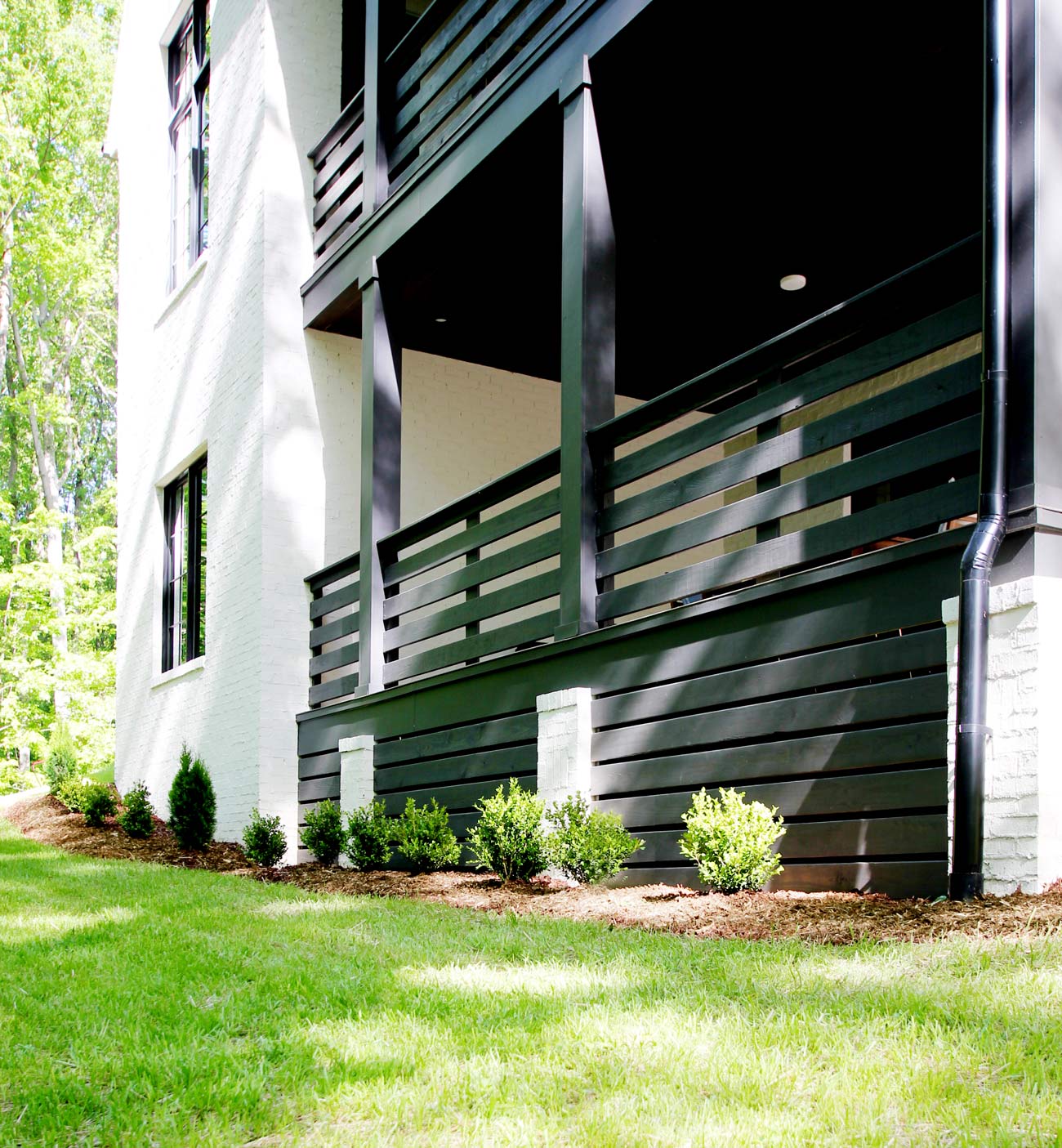
We decided to create deck skirting made of horizontal decking boards with spaces in between. Deck skirting is a decorative material installed around the perimeter of a deck to hide the framing, improve curb appeal, and help keep animals from nesting underneath. Popular deck skirting materials include horizontal wood boards, lattice panels, composite decking, stone veneer, and metal panels.
For this project, I used pressure-treated 2x4s and 6″ decking boards.
What Is the Best Material for Deck Skirting?
Choosing the best material for deck skirting depends on your budget, maintenance preferences, and the overall style of your home. While traditional wood remains one of the most popular options due to its affordability and custom appearance, materials such as composite decking, lattice, and stone veneer each offer their own advantages. The table below compares some of the most common deck skirting materials to help you determine which option is the best fit for your project.
No matter which material you choose, proper ventilation and access to the area beneath the deck should be considered during the design process. The best deck skirting not only improves curb appeal but also helps protect the underside of the deck while creating a clean, finished appearance.
| Material | Best For | Cost | Maintenance |
|---|---|---|---|
| Wood | Traditional homes | Low | Medium |
| Composite | Low maintenance | Medium | Low |
| Lattice | Budget projects | Low | Medium |
| Stone | Luxury homes | High | Low |
Here you can see a before picture of our lower porch.

In this tutorial, I’m going to show you how I installed our horizontal deck skirting to match our porch railing. Let’s get started!
Step 1: Measure and Cut 2x4s
Each of the brick piers under our bottom deck has different heights because the ground slopes from left to right. So I measured each one from the bottom of the existing skirt board to the ground. This gave me the length I needed for each 2×4.
I used these measurements to mark and cut all of my 2x4s with a miter saw.
Step 2: Drill Pilot Holes
Next I determined the setback of the skirt from the front face of the piers. I held the 2×4 in place and drilled a hole in the middle of the 2×4 all the way through so it made a mark on the brick.
Then I used a hammer drill to drill a hole into the brick on that mark. I drilled the hole about 1/2″ deep.

Holding the 2×4 in place again, I screwed a Tapcon screw through the hole in the 2×4 and into the hole in the brick.

I placed a level on the side of the 2×4 to make sure it was plum.

Near the bottom of the 2×4, I drilled a second hole until I hit the brick. Then I switched to the hammer drill to continue drilling the hole into the brick.

Then I screwed a Tapcon into that hole.
Step 3: Measure and Cut Decking Boards
Once I had all of the 2x4s in place, I measured the distance between each pier. I used these measurements to mark and cut the decking boards.

Step 4: Fasten the Decking Boards
Working in one section at a time, I started installing the decking boards. I decided that the thickness of the board would be a good amount of space to leave between each one. So I cut a couple of small pieces to use as spacers.

For the first board, I placed the spacer between the existing top skirt board and the board I was installing. I used a finished nailer to tack the board onto the 2×4. Then I tacked on the other end.

Working my way down, I repeated this until I got to the ground.
Then I moved to the next section.
After I nailed on all of the boards, I went back and used decking screws to properly secure the boards to the 2x4s. I put two screws in each end.
Cost of Deck Skirting
| Material | Typical Cost |
|---|---|
| Wood Boards | $2–$8/sq ft |
| Lattice | $1–$4/sq ft |
| Composite | $4–$12/sq ft |
| Stone Veneer | $10–$30+/sq ft |
| Metal Panels | $5–$15/sq ft |
The Finished Product and Our Thoughts
Here’s a look at the finished deck skirting. I have to say, Brooke and I both are very happy with how everything turned out! Finishing this project also allowed us to continue our landscaping around the back of the house.
Deck skirting is one of those finishing details that can make a deck feel like an intentional extension of the home rather than an afterthought. If you’re planning a new build or outdoor living space, browse our collection of house plans for inspiration on creating cohesive exterior designs with covered porches, decks, and outdoor entertaining areas.

How to Keep Animals Out From Under a Deck
One of the unexpected benefits of adding deck skirting is that it can help keep animals from making a home underneath your deck. Open spaces beneath decks often attract squirrels, raccoons, opossums, and other small animals looking for shelter. By installing deck skirting and properly closing off large openings, you can make the area much less inviting while still maintaining the ventilation needed to prevent moisture issues. If animal intrusion is a concern, consider adding wire mesh behind the skirting and ensuring any access points are securely covered. Not only does deck skirting improve the appearance of your deck, but it can also help protect your outdoor living space from unwanted visitors.
FAQs
What is the cheapest deck skirting option?
Lattice is typically the most affordable deck skirting option. It is widely available, easy to install, and can quickly improve the appearance of an exposed deck. While it may not provide the modern look of horizontal skirting or composite materials, it remains a popular choice for budget-conscious homeowners.
Does deck skirting increase home value?
Deck skirting can improve curb appeal by creating a more finished and polished appearance. While it may not significantly increase a home’s appraised value on its own, it can enhance the overall appearance of an outdoor living space and make the deck feel more integrated with the home.
Should deck skirting touch the ground?
In most cases, deck skirting should not sit directly on the ground. Leaving a small gap helps prevent moisture buildup, reduces the risk of rot, and allows for proper drainage. The exact clearance will depend on the material being used and the conditions around the deck.
How do you ventilate under a deck?
Proper ventilation is important to prevent moisture buildup beneath a deck. Ventilation can be achieved by incorporating vents into the skirting design, leaving small gaps where appropriate, or using materials such as lattice that naturally allow airflow. Adequate ventilation helps protect both the deck structure and the skirting material over time.
What is the best material for deck skirting?
The best material depends on your budget, maintenance preferences, and design style. Wood remains a popular choice because it can be customized to match the deck, while composite materials offer excellent durability and low maintenance. Stone veneer can provide a more upscale appearance, and lattice remains a practical option for budget-friendly projects.
How much does deck skirting cost?
Deck skirting costs vary depending on the material, deck size, and installation method. Basic lattice skirting may cost as little as $1 to $4 per square foot, while wood, composite, and stone veneer options can range from $2 to $30 or more per square foot. Labor and custom access panels can also impact the total project cost.
How do you keep animals out from under a deck?
Installing deck skirting is one of the most effective ways to discourage animals from nesting beneath a deck. For additional protection, many homeowners install wire mesh behind the skirting to prevent squirrels, raccoons, opossums, and other small animals from finding their way underneath while still allowing airflow.
Can composite decking be used for skirting?
Yes, composite decking can be used for deck skirting and is a popular choice for homeowners seeking a low-maintenance solution. Composite skirting can be installed horizontally or vertically to match the deck boards, creating a clean and cohesive appearance while resisting rot, insects, and weather-related damage.



10 Comments
This is beautiful – we’ve been discussing a similar project after we just had our deck screened. We want to use the underneath to store some items – curious, did you make any kind of door to have access to the underneath? If so, I would love to see how you made the door!
May 8, 2020 at 1:10 pmThanks so much,
Karen
Thanks! Glad you like it. We didn’t do a door, but thought that we might go back and add one later. When we do, we’ll be sure and share how we did it.
May 8, 2020 at 9:52 pmAbsolutely love this! you said you used pressure treated wood, so did you paint or stain it? If so, what color did you go with? Also, it appears it was painted or stained prior to instillation??? Thank You for posting this, great idea!
May 8, 2020 at 9:23 pmThanks! We did paint it before putting it up. It’s treated lumber so we had to let it dry before painting. The color is Sherwin Williams Iron Ore.
May 8, 2020 at 9:53 pmAre the horizontal boards you used 2×6’s?
July 13, 2020 at 11:00 pmThis is absolutely gorgeous! Great job. I was wondering why you chose paint over stain? I have to make this decision on our horizontal planking, and I keep going back and forth. I stained my railing black last year, and I have noticed it can come off pretty easy just spraying it with a water hose! So I’m really curious about the specific type of paint you used. Would you mind to share that info? I know you said it was Sherwin Williams iron ore, but I can’t find any other info. Sorry if I missed it. Thanks for sharing all that you do! It is so very inspiring.
August 23, 2020 at 11:55 pmI have been told by people working at SW store that painting last a lot longer than stain. They can help you with best type of paint for your decking needs.
March 23, 2021 at 3:11 amWhat Color is the House painted?
May 6, 2021 at 2:39 amI just painted my house benjamin Moore – white dove.
July 5, 2022 at 12:25 pmThis looks more like BM Swiss coffee- I think that’s the name.
White Dove- is absolutely beautiful- it’s so perfect, for my neighborhood- anyways 😉
I also used BM Revere Pewter on the shutters and porch skirting-
Beach glass front door- quiet moments porch ceiling.. And- about to stain the fencing walnut- and installed bronze finish security screen doors 😉
These people have a beautiful home..
I’m pretty sure that’s Swiss coffee.
Willingly I accept. The question is interesting, I too will take part in discussion. I know, that together we can come to a right answer.
February 26, 2022 at 8:40 amdfgdlfg2131.32
https://howyoutoknowacxv.online/map.php