


If you are like us, you’ve probably faced the challenge of deer snacking on your plants or maybe even eating them entirely. Whether it’s fresh flowers or shrubs, it always seems like these clever creatures know exactly when you have just planted. It’s incredibly frustrating to watch all that hard work, money, and a gorgeous garden go to waste. This weekend, we decided to take a new approach, sticking mostly to deer-resistant plants and flowers and using a repellant spray to hopefully deter.
Why Are Deer So Drawn to Plants and Flowers?
Before we dive into the solutions, let’s take a quick look at why deer are such persistent garden visitors. Deer are primarily herbivores and are constantly on the lookout for food. During the spring and summer months, when fresh vegetation is abundant, they’ll nibble on anything they can reach. They tend to favor tender, juicy plants like roses, tulips, and hostas—basically, anything that’s soft and flavorful. While you may not be able to completely deer-proof your shrubs and flowers(unless you’re willing to install fences or an electric perimeter), choosing plants that deer find unappealing is a great start.

Deer-Resistant Shrubs and Flowers: What We Planted
The key to creating a deer-resistant exterior is choosing plants that deer tend to avoid because of their scent, texture, or taste. While nothing is 100% deer-proof, these varieties have proven to be much less tempting.
1. Boxwoods
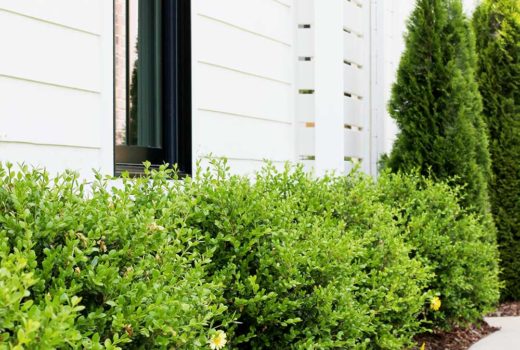
Boxwoods are a classic choice when it comes to adding structure to your garden. These evergreen shrubs have a dense, compact form and are low-maintenance. Deer tend to avoid boxwoods because of their leathery leaves and strong scent. We love them because they offer year-round greenery and are perfect for shaping into hedges or topiaries.
2. Lavender
Deer dislike strong-smelling plants, and lavender’s fragrant oils make it a perfect choice for deterring them. Lavender also adds a pop of color and a soothing scent, making it a great addition to flower beds. Plus, it attracts pollinators like bees and butterflies, so it benefits both the aesthetics and the local ecosystem.
3. Black-eyed Susans
Known for their bright, cheery flowers, Black-eyed Susans are both beautiful and hardy. While they’re attractive to pollinators, deer usually leave them alone due to their coarse texture and strong scent. These perennial flowers also thrive in a variety of soil types, making them easy to grow.
4. Daylilies
Deer aren’t particularly fond of daylilies, perhaps because of their tough leaves and sometimes bitter taste. They’re also incredibly versatile, coming in a range of colors from orange and yellow to pink and purple. Daylilies are perfect for adding a burst of color to the garden, and since they’re perennial, they come back year after year.
5. Deer-Resistant Ornamental Grasses
We also added a few ornamental grasses to our garden for texture and movement. Varieties like Blue Fescue (Festuca glauca) and Maiden Grass (Miscanthus sinensis) are typically safe from deer. The stiff, spiky texture makes them unappealing to hungry deer, and their graceful, arching stems add a sense of elegance to the landscape.
Potting Shrubs for Added Flexibility and Protection
One of our favorite ways to incorporate deer-resistant plants into our garden is by using large decorative pots. Shrubs in pots are not only versatile and mobile but also help keep plants safe from grazing deer if placed in more secure areas. When we want to add some greenery to our porch, patio, or even our front entryway, we use pots as a practical way to display our boxwoods or small ornamental shrubs.
Top Potting Picks:

Threshold™ by Target – Decorative Planter Pots
Target’s Threshold line offers a variety of large, stylish pots that are perfect for your shrubs. We especially love their cement and stoneware options, which are durable and have a clean, modern aesthetic. They come in a range of sizes, and their neutral tones allow the plants to stand out. These pots are perfect for creating a dramatic display while ensuring your plants stay safe from any hungry deer.

Pottery Barn – Large Garden Planters
Pottery Barn offers a selection of beautiful, large garden planters, perfect for housing shrubs like boxwoods or ornamental grasses. Their sleek and sturdy designs range from classic ceramic to more rustic weathered finishes. These pots are not only stylish but also have drainage holes and a durable structure to hold larger plants comfortably.

Wayfair – Oversized Outdoor Planters
Wayfair’s collection of oversized outdoor planters is another great choice for potting shrubs. We’ve found their selection of resin and fiberglass pots to be especially practical, as they’re lightweight, weather-resistant, and can easily hold a variety of plants. Plus, the wide array of sizes and colors allows you to find the perfect match for your garden style.
Extra Tips for Keeping Deer at Bay
- Repellent Sprays: If you’re still seeing deer damage despite choosing deer-resistant plants, consider using natural deer repellents. These sprays are typically made with strong-smelling ingredients like garlic, peppermint, or hot pepper, which deer tend to avoid.
- Mulch & Scent: Mulching with fragrant herbs like lavender, thyme, or rosemary can also act as a natural deterrent. The strong smell will help keep deer at a distance.
- Motion-Activated Devices: Sometimes, a little movement can be a big deterrent. Motion-activated sprinklers or ultrasonic devices can scare deer away without causing harm.
Final Thoughts
Deer-resistant plants and flowers have been a game-changer for us in creating a lush, deer-free garden. We’ve managed to design a space that’s both beautiful and safe from grazing wildlife. Whether you’re planting shrubs directly into the ground or potting them in decorative containers, there are plenty of options to create a garden that flourishes without the constant worry of deer nibbling away at your hard work. So, if you’re ready to tackle the challenge of keeping your garden safe, look for those tough, scent-heavy, and prickly plants, and get creative with containers to protect them. Happy gardening!


No Comments